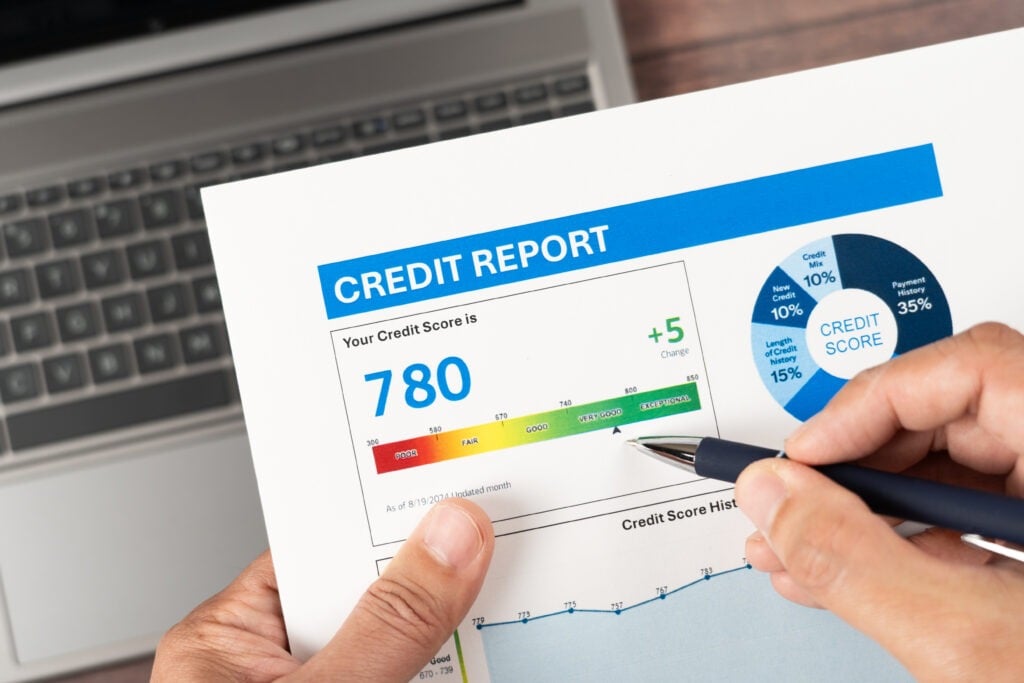
Your credit utilization ratio is arguably the most important number in your financial life that you might not know about.
Key Takeaways
It’s 30% of Your Score: Next to paying on time, this is the biggest factor in your credit rating.
The Magic Number is 30%: You should never use more than 30% of your available credit limit on any single card.
Timing Matters: Paying your bill before the statement date can boost your score faster.
Consolidation Helps: Refinancing high-interest debt is a quick way to fix high utilization.
Why is My Score Dropping if I Pay on Time?
We hear this question constantly at our office in Orillia. A client pays every bill on time, never misses a payment, yet their score is stuck in the 600s.
The culprit is almost always Credit Utilization.
Even if you pay off your Visa in full every month, if you are maxing it out during the month, the credit bureaus view you as a “high-risk” borrower. Lenders in Simcoe County want to see that you can manage credit responsibly, not that you are living on the edge of your limits.
What is Credit Utilization? (The Math)
Simply put, it is the percentage of your available credit that you are currently using.
Formula: (Current Balance ÷ Credit Limit) x 100 = Utilization Ratio
Example: You have a Credit Card with a $5,000 limit. You currently have a balance of $2,500.
$2,500 ÷ $5,000 = 50% Utilization.
This 50% ratio is dragging your score down, even if you plan to pay it off on Friday.
The “Zone” Strategy: Where Should You Be?
To get the best mortgage rates in Barrie or Innisfil, you want your utilization to be “Excellent.” Here is a table to help you visualize where you stand:
| Utilization Ratio | Rating | Impact on Mortgage Approval |
| 0% | Inactive | Neutral/Negative. Lenders want to see some usage to prove activity. |
| 1% – 10% | Excellent | Best. Shows high discipline. Maximizes your score. |
| 10% – 30% | Good | Safe. Standard recommendation. No major negative impact. |
| 30% – 50% | Caution | Negative. Your score will likely drop. Signals potential stress. |
| 50% – 100% | High Risk | Severe. Significant score drop. Red flag for A-Lenders. |
How to Fix High Utilization Quickly
If you are planning to apply for a mortgage soon, here are three tactical ways to lower this ratio.
1. The “Mid-Month” Payment Trick
Credit card issuers typically report your balance to the bureaus (Equifax/TransUnion) on your statement date, not your due date.
Strategy: Log in and pay your balance down to $10 three days before your statement comes out.
Result: The bureau sees a $10 balance (low utilization) instead of a $2,000 balance.
2. Increase Your Limit (Don’t Spend It!)
This sounds counterintuitive, but it works mathematically.
Strategy: Ask your bank to increase your limit from $5,000 to $10,000.
Result: If you still owe $2,500, your utilization instantly drops from 50% to 25% without paying a dime.
Note: Only do this if you are disciplined enough not to spend the extra room!
3. Consolidate into a Mortgage
If your utilization is high because you are carrying genuine debt (not just monthly spending), high-interest credit cards are the hardest to pay down. Many of our clients use refinancing to access home equity. By rolling that $20,000 Visa debt into your mortgage, you clear the credit card balance to $0 (0% utilization), which skyrockets your credit score almost immediately.
Why Local Lenders Care
When we are helping first-time buyers or those moving from the GTA, we look at the Total Debt Service (TDS) ratios. High credit card balances reduce the amount of mortgage you can qualify for.
Lowering your utilization doesn’t just improve your score; it increases your purchasing power.
FAQs on Credit Utilization
Does closing a credit card help my utilization? No! Closing a card removes that available credit limit from your equation, which usually increases your utilization ratio on your remaining cards. Keep old cards open, even if you don’t use them often.
Is 0% utilization the best goal? Not necessarily. Having 0% on every card for months might lead to an “inactive” status. It is better to have a very small balance (like a Netflix subscription) paid off monthly to show active, responsible history.
How often does my utilization update? Usually once a month. This means if you pay off a big balance today, you might have to wait 30 days to see the change reflected in your score.
Does utilization apply to Lines of Credit? Yes. While HELOCs (Home Equity Lines of Credit) are treated slightly differently in some scoring models, unsecured lines of credit count heavily toward your revolving utilization.
Need to Clean Up Your Credit?
If you are confused about your balances or wondering if you should pay off debt before applying, don’t guess.
Craig Brunsdon and the team at TMC Greater Simcoe can look at your specific situation. We might tell you to pay off Card A but leave Card B alone to get the best score boost.
Let’s optimize your finances. Contact us for a credit review or try our Affordability Calculator to see what you can afford today.